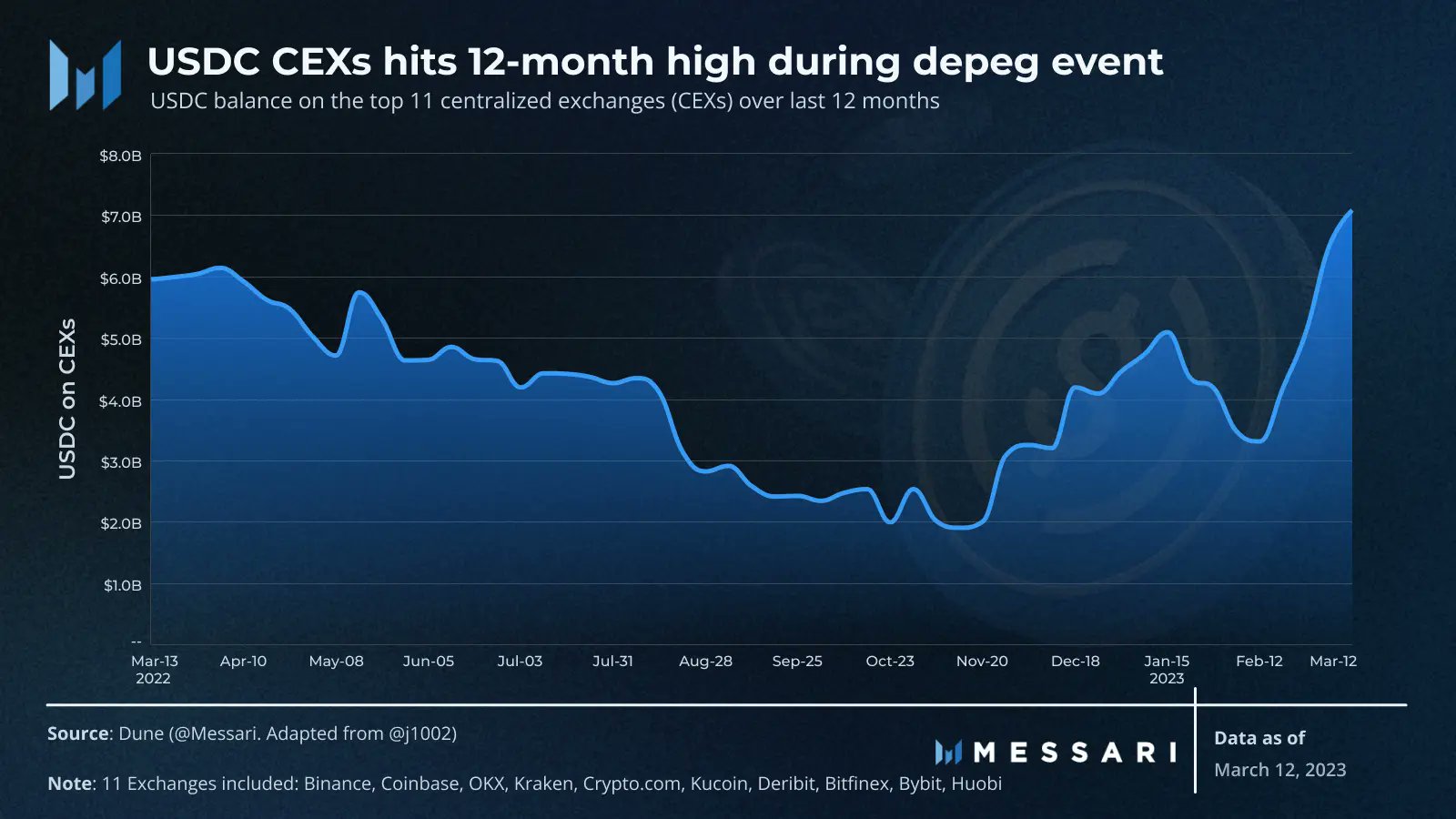
- CEXs signed up an enormous rise in use and balance after USDC’s de-peg
- Sustained interest in numerous CEX tokens likewise tape-recorded a hike
Despite the negative results of the USDC scenario on numerous elements of the cryptocurrency sector, centralized exchanges had the ability to gain substantial gains throughout this time.
Realistic or not, here’s BNB market cap in BTC’s terms
CEXs gain rewards
According to information offered by Messari, activity on CEXs struck a 12-month high due to USDC’s de-pegging occasion. Exchanges such as Binance, OKX, and Kraken all tape-recorded an uptick in activity over this duration.

Among the factors for the high activity was the drop in Externally Owned Addresses on Ethereum. Externally Owned Addresses (EOAs) are user-controlled accounts on the Ethereum blockchain that are owned and managed by specific users. Unlike agreement accounts, which are managed by code, EOAs are managed by their personal secrets and can just be accessed by their particular owners.
The majority of the USDC environment was incorporated with the Ethereum blockchain. As the USDC stablecoin differed its peg, the EOAs visited $4 billion in worth. Central exchanges (CEXs) handled to accommodate this excess supply and signed up a considerable 49% walking in their balance as an outcome.

Source: Messari
At the time of composing, Binance was leading in terms of exchange balance, with $31.9 billion on its platform. In contrast, OKX and Bitfinex was available in 2nd and 3rd location with $5.1 billion and $3.2 billion, respectively.
Source: Dune Analytics
Momentum en route?
Following the FTX occurrence, many long-lasting users discovered it hard to trust other central exchanges. Conquering this skepticism was a significant difficulty for these exchanges. The execution of evidence of reserves assisted to develop some degree of trust and information openness for consumers utilizing central exchanges.