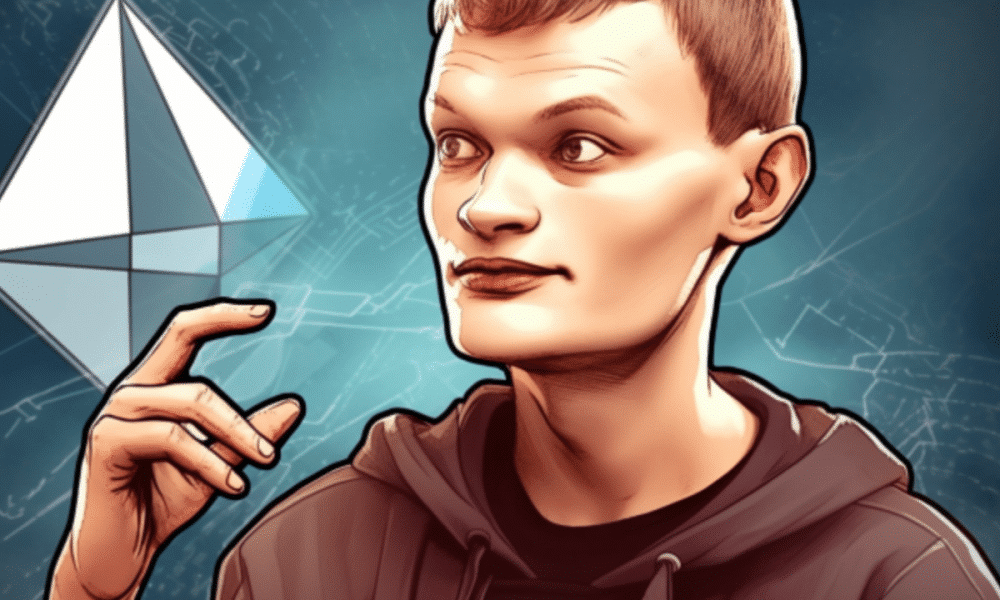
- The Ethereum blockchain would broaden to a three-layer customer.
- Latency and information performance stayed an issue.
Ethereum [ETH], pestered by deal hold-ups and network blockage a couple of years back, has actually been on top of fixing these obstacles, thanks to the myriad of scaling services. The last of these is the zero-knowledge combination with the Ethereum Virtual Maker [zkEVM], introduced by Polygon [MATIC].
Just how much are 1,10,100 ETHs worth today?
Although the Mainnet Beta was inaugurated on 27 March, very few desired individuals comprehend how the L1 job would engage with its L2 equivalent. Due to this blurred view, Vitalik Buterin launched a blog post worrying the matter.
It’s time for a sharing formula
According to the Ethereum co-founder, the job’s nodes including the agreement and execution customer have actually been lowered to permit zkEVM involvement. The execution customer utilizes the Proof-of-Stake (PoS) system to verify information on the blockchain. On the other hand, the agreement customer is accountable for keeping the current database and performing deals.
Usually, these customers represent two-thirds of the network. With the intro of the zk rollups have actually guaranteed that it is not the case any longer. Enabling designers to step in while the chain stops settling blocks. Vitalk kept in mind,
” Since today, no agreement or execution customer comprises more than 2/3 of the network.”
In addition, Vitalik mentioned that the area released would indicate that zkEVM ends up being the 3rd Ethereum customer. He kept in mind that it will not be as instant because the L1 requires to work on utilizing them for confirmation to validate execution.
Of obstacles and fixes
Despite the zk ability, Vitalik discussed that there were issues that no L2 might fix. He discussed the latency difficulty, which might enable interruption of the chain after a late released block. And information performance, which might expose validator signatures. He pointed out that there were possible services in the long-lasting stating,
” The latency difficulty might be resolved by being cautious when developing the single-slot finality procedure. The information performance concern would need to be resolved by having a different procedure for aggregating verification-related information.” Further insights into the[ETH]publication made reference of the zk Concise Non-Interactive Argument of Understanding (zk-SNARKS). As zk evidence enable celebrations to validate a real declaration without exposing any other details, zk-SNARKS permits evidence of belongings without any interaction in between the prover and verifier. Read
Ethereum’s
Cost Prediction