Disclaimer: The info provided does not make up monetary, financial investment, trading, or other kinds of suggestions and is entirely the author’s viewpoint.
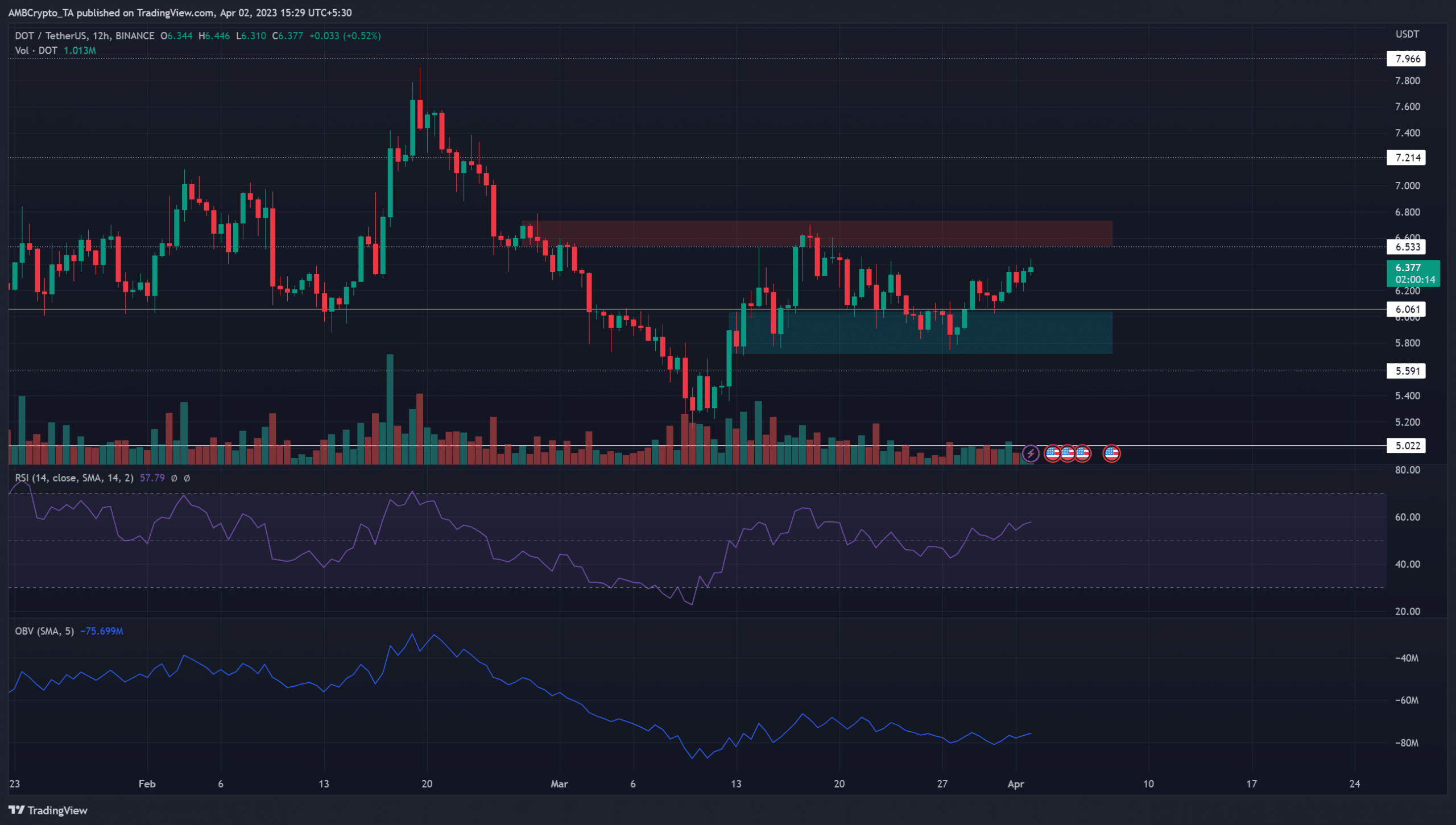
- The confluence of resistance at the $6.6 area made it a substantial zone of supply.
- Another rejection there would show the development of a variety.
The greater timeframe cost chart of Polkadot revealed a bearish leaning, despite the fact that the possession published gains of 30% from 10 March to 18 March. The marketplace structure stayed bearish, and DOT appeared to trade within a variety.
Read Polkadot’s [DOT] Cost Forecast 2023-24
The bulls had the ability to stop the losses at the $5.3 level. Throughout March the purchasers achieved success in pressing costs back above the $5.8-$ 6 area.
This was possible when bliss grasped the crypto market when BTC rallied from $20.6 k to $$ 28.8 k.
The $6.6 bearish order block was not yet breached

Source: DOT/USDT on TradingView
On the day-to-day timeframe, the bearish structure of Polkadot appeared when we think about the reality that the drop in costs did not see a visible stall given that mid-February when DOT saw a severe rejection at the $7.75 mark. Among the bearish order obstructs that DOT formed on the day-to-day timeframe throughout this slide was highlighted by the red box in the $6.6 area.
Realistic or not, here’s DOT’s market cap in BTC terms
But the healing of DOT did not yet move the structure, as the regional high formed on 18 March at $6.7 was just a lower high in the sag. This has confluence with the bearish order block at the $6.6 area from late February.
The RSI revealed some bullish momentum however did not yet reveal a strong uptrend in development. The OBV was flat in the previous week and has moved southward from mid-March.
The lower timeframe belief highly preferred bulls